flowchart LR
    A[Route A: retrospective redesign<br/>past studio board] --> A2[redesigned decision]
    B[Route B: live studio application<br/>current studio board] --> B2[active design move]
    A2 --> C[Same A4 components:<br/>decision · evidence · workflow · output · threshold]
    B2 --> C
Week 6: Evidence and Pathway Mapping
From a Good Question to a Realistic Workflow Plan
Today’s Agenda
Session 1
Lecture / decision gate
- triage the evidence you already use
- compare pathways honestly
- choose Route A or Route B
- name the failure points early
Session 2
Round table on YOUR work
- declare your route and smallest useful output
- reconstruct that choice in four steps
- finalize A2, branch A4
This is the A2 decision gate and your A4 route declaration. We commit to one direction together, gently and on purpose.
Course progress
This week locks the pathway contract
spreadsheet
GIS
BIM/BEM
route choice
prototype
verification
Input A1 board + evidence audit + route tests from Weeks 3-5
Decide Route A/B, primary pathway, smallest useful output
Output A2 pathway contract + A4 branch declaration
Bridge one named export/ingestion path for GH, notebook, GIS, or package
Tool coverage board
What we have mapped so far
Core mapped
- spreadsheet thresholds
geopandasspatial comparison- BIM-derived performance proxy
Peer / bridge
- GH components
- Ladybug/Radiance walkthrough
- studio-specific plugin knowledge
To be mapped
- Python design-decision notebook
- AI-assisted component verification
- final package handoff
The board keeps the wishlist honest: a tool is either mapped, peer-supported, exploratory, or out of scope.
Strategic, not exhaustive
Evidence mapping is a decision, not a collection
You are not collecting everything. You are deciding:
- what actually matters to this decision
- what is realistically accessible this semester
- what is convincing for your audience
- what your chosen pathway can realistically process
A source earns its place only when it could change the scheme, not decorate the presentation.
Worked pathway claim: Kai Tak
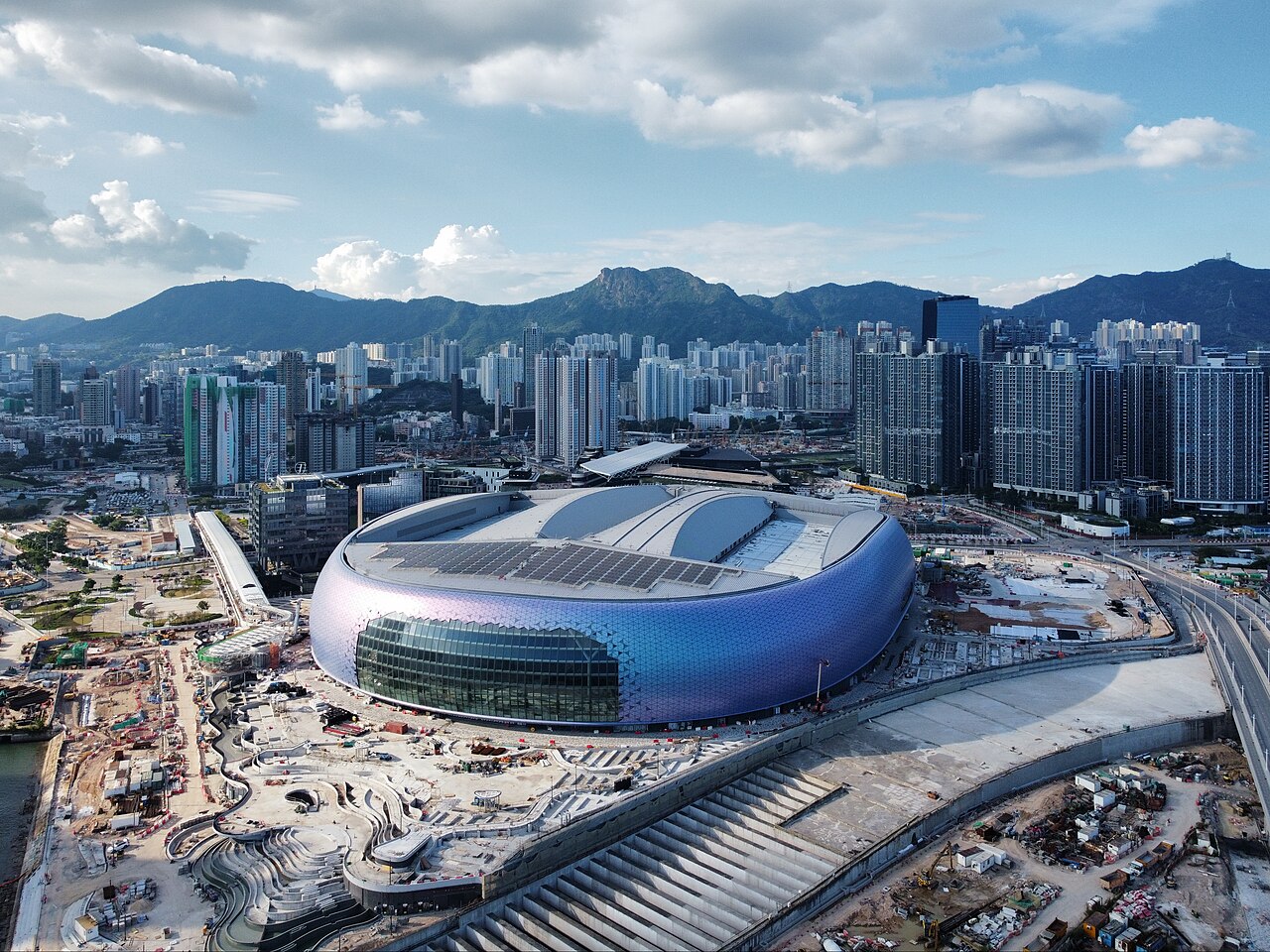
If this were your next studio decision, which evidence sources would actually change the scheme rather than merely decorate the presentation?
Evidence categories to sort
Often decisive
- published research
- standards and code
- site observations
- open datasets
- simulations
- maps and spatial layers
Often supporting only
- precedent and case studies
- interviews or surveys
- one-off articles
Useful for framing, rarely enough on their own.
Not every category belongs in every project.
Triage every source
Ask four questions of each one:
Relevant Does it bear on this decision?
Trustworthy Can the source be inspected and trusted?
Local Is it close enough to your site and program?
Usable Can I actually use it this semester?
A simple source triage table
| Source | relevance | access | confidence | best use |
|---|---|---|---|---|
| precedent image set | medium | easy | low-medium | framing |
| planning dataset | high | medium | high | site constraints |
| one-off online article | low | easy | low | not enough on its own |
The table is the argument: relevance and confidence decide what leads, access decides what is feasible.
The key fork
Two routes, one set of A4 components
Everyone arrives at the same A4 package. You choose how you get there.
One decision, not the whole project You are mapping a pathway for one decision and its smallest useful output — not re-planning your entire studio project.
The fork, side by side
Route A · retrospective redesign
- start from a past studio board
- pick one decision you would now redo
- arrive at a redesigned decision with evidence behind it
- safest when your current studio is too unsettled to instrument
Route B · live studio application
- start from your current studio board
- pick one decision you are facing now
- arrive at an active design move you can apply this term
- best when a live decision genuinely depends on the analysis
Both converge on the same A4 components. Pick the route that lets you do honest work now.
Evidence → pathway matrix
Let the kind of evidence that drives your decision point to a pathway.
| If the deciding evidence is… | …the natural pathway is | strongest when |
|---|---|---|
| comparison of options and thresholds | spreadsheet |
comparison logic is the core task |
| location, overlap, spatial reach | GIS |
location drives the decision |
| repeatable analysis and figures | Python |
repeatability and flexibility matter |
| families of design options | GH / parametric |
design variables are central |
| performance under assumptions | BIM/BEM / simulation |
model-based testing is needed |
| an accelerable, verifiable step | AI-assisted |
the result can be inspected |
Compare the pathways directly
| Pathway | strongest when | weak when |
|---|---|---|
spreadsheet |
comparison logic is the core task | the question is deeply spatial or repetitive |
GIS |
location and overlap drive the decision | the project barely depends on spatial analysis |
Python |
repeatability and flexible analysis matter | setup outweighs the analytical benefit |
GH / parametric |
design variables and option families are central | there is no clear evaluation output |
BIM/BEM / simulation |
performance assumptions need model-based testing | setup or cleanup exceeds the decision value |
AI-assisted |
a component can be accelerated and verified | the result cannot be inspected or reproduced |
Pathway contract
A2 has to name the transfer path
Every pathway declaration includes a handoff target. This is what prevents “I chose a tool” from replacing the actual method.
| Pathway | Export / handoff | GH or package bridge |
|---|---|---|
| spreadsheet | variant_scores.csv |
read into GH; color/rank variants |
| GIS | site_layers.geojson + score table |
import context geometry and attributes |
| Python | notebook + exported figure/table | feed metrics or plots to package/GH |
| GH / parametric | GH definition + variant log | direct geometry variants and CSV metrics |
| BIM/BEM / proxy | scenario table + metrics CSV | drive facade/massing revisions |
| AI-assisted | prompt log + verified component | GhPython/C# function or documentation block |
Pathway choice should feel boring
If the pathway is right, it should feel obvious in hindsight.
Wrong reason “Python seems more impressive.”
Better reason “The question is spatial, and GIS is the shortest path to a useful output.”
A2 work session
By the end of class, each student should have:
- one clear decision context
- one evidence → pathway matrix draft
- one chosen route (A or B) and one chosen pathway
- one minimal pilot target for A3
Pathway commitment drill
Complete this sentence out loud, then post it:
I am choosing spreadsheet / GIS / Python / GH / BIM-BEM / AI-assisted because my decision depends primarily on ________, and the minimum useful output will be ________.
If you cannot finish the sentence clearly, the pathway is not chosen yet — and that is fine to discover here.
Warning signs
Catch these now
- too many source types with no hierarchy
- a pathway choice that does not change the method
- no clear output format
- a question still too large for a prototype
Uncertainty check
Choosing a pathway also chooses what you will ignore
Question for A2 What does your chosen pathway make visible, and what does it make almost impossible to see within this semester?
Write both answers into the A2 matrix. The unsupported part becomes a limit, not a hidden weakness.
ML principle connection
Does your route generalize, or only fit this one case?
Principle 6 — Generalization is the goal In ML, a model that is perfect on its training set but fails on new data has overfit. A workflow is the same: it must hold up beyond the single case you tuned it on.
So Pick a route whose smallest useful output would still be defensible on a second site, season, or scenario — not just the one that looks good today.
BREAK
Take 10 minutes.
When you return, post one rough material to Slack for Session 2 — workflow sketch, pathway matrix, A4 branch draft, or a diagram of the smallest useful output.
Session 2 · Round table
Project Reasoning Round Table
Decision Evidence Variation Output Threshold Action
Upload one rough material to Slack before Session 2 — workflow sketch, pathway matrix, A4 branch declaration draft, or a diagram of the smallest useful output. feeds A2
Reconstruct your route in four steps
Object this week: your chosen route and its smallest useful output.
Did Which route did I pick, and what output am I aiming at?
Assumed What am I assuming the evidence will show or allow?
Risk Where could this route stall or the output stay out of reach?
Verify What is the smallest thing I can do to confirm the route works?
Speak for 60–90 seconds: which route are you choosing, and what is the smallest useful output? Posting + an honest reconstruction is the graded unit — not how you spoke. Volunteers go first; random draw may fill the remaining examples.
End-of-class deliverables
Leave with:
- one evidence → pathway matrix draft
- one chosen primary pathway and route (A or B)
- one list of necessary input files or sources
- one description of the smallest viable A3 prototype
Submission logic
Make A2 easy to read
A strong A2 lets a reader answer three questions without your help:
Why this evidence? Why this pathway? Why now?
Week 7 begins A3: you build the smallest viable prototype of the route you declared today.
Week 6 · feeds A2 + A4 branch